
6 minute read
How to Avoid Overpaying for a Car
By Kristen Reichert • Reviewed by Mary Ann Nickolai
Posted on September 16, 2026



Buying a vehicle is a big financial decision. A little preparation can save you thousands of dollars over the life of your loan.

Before you shop, research the vehicle you have in mind to understand its current value and projected resale value. Next, get pre-approved for your auto loan prior to visiting a dealership. Most importantly, keep the price, trade-in value, and financing decisions separate. Doing so gives you more control during negotiations and helps you avoid paying more than necessary. For even more savings, research preowned vehicles with low mileage, but request a Carfax report to be aware of service, ownership history, and any accidents or damage.
1. Why should you compare vehicles with higher resale value before buying?
Every vehicle depreciates, or loses value over time, but certain models depreciate faster than others. Consider buying a model that depreciates less quickly and brings strong resale value. This can help you build equity faster when you’re ready to trade-in or sell the vehicle. Compare models on CarEdge to find vehicles that offer higher trade-in values. Kelley Blue Book also lists its “Best Resale Value Awards” to find top models of new vehicles each year.
2. How do you negotiate the sticker price?
The sticker price, also known as the manufacturer’s suggested retail price (MSRP), isn’t the price you have to pay. MSRP is not the same as the invoice price, which is what the dealer paid for the vehicle. Asking for the invoice price helps you spot the dealer’s markups and add-ons. Research the vehicle’s make and model using Kelley Blue Book or JD Power to understand its value.
Pro tip: Always negotiate the purchase price before discussing your trade-in or your pre-approval.
3. Why should you ask for the out-the-door price?
The out-the-door price (OTD) provides the total cost of buying a vehicle and includes:
- The selling price
- Taxes
- Registration and title fees
- Dealer fees, and
- Optional add-ons and products
- Minus any credits such as trade-ins or down payments
Read the fine print to check for any add-ons, services, or fees before you sign any paperwork. If you spot any items that you didn’t agree to or discuss with the sales representative, ask questions to ensure you understand the terms. Keep a copy of the contract in case you need to dispute charges later.
4. Why should you ask about dealer add-ons?
The window sticker lists the MSRP along with the standard features and factory-installed options, like rear cameras, navigation systems, and cruise control.
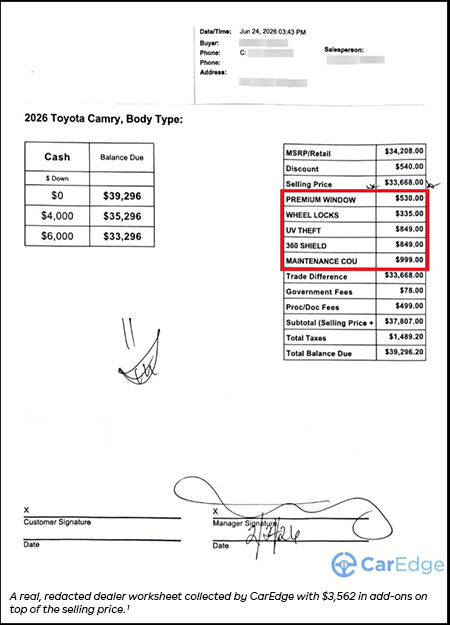
However, dealer add-ons can increase the final cost, and “mandatory” dealer add-ons are never mandatory. The buyer can request that they be removed and be willing to shop with another dealer if they refuse.
Common dealer add-ons include:
- Window tint
- Mud flaps
- Floor mats
- Extended warranties
- Guaranteed Asset Protection (GAP) coverage
- Paint and fabric protection
- VIN etching
- Door guards and pinstriping
Some products may provide value, while others are unnecessary and available elsewhere for less. Review the addendum sticker next to the window sticker and ask questions about the dealer add-ons. You can negotiate optional dealer add-ons to reduce the price.
Pro-tip: GAP coverage and other payment protections are useful, and you should compare options through your financial institution before purchasing them at the dealership.
5. Why should you discuss the loan term instead of monthly payments?
Sales representatives at dealerships often target the buyer’s monthly payment instead of the OTD price and loan term. These offers include longer-term loans to make the payment amount more attractive. Extending the loan term increases the risk of negative equity as you continue paying for the vehicle while its value depreciates.
Getting pre-approved by a lender before you head to the dealership gives you a clear understanding of:
- Your budget
- Approved loan amount
- Interest rate
- Loan term
- Estimated monthly payment
A pre-approval allows you to negotiate with confidence and focus on the total cost instead of the payment alone.
6. Why should you make a large down payment?
To maximize the value and reduce the financed price, it’s recommended to make a down payment of 20% for a new car and 10% for a used car.² This strategy lowers the loan amount, reduces the amount spent on interest, and often allows for a shorter loan term. It also ensures that the vehicle has value, or equity, to be used for a trade-in for your next vehicle purchase.
7. Why should you prepare your trade-in vehicle?
Preparing your trade-in vehicle before heading to the dealership increases your chances of getting a higher offer. Clean your trade-in thoroughly inside and out and address any minor, cost-effective repairs. The model year and mileage are also major factors in resale value, and you can research your vehicle’s value on CarEdge or JD Power. Be prepared for the dealership to have their mechanic inspect your vehicle. Any issues discovered during inspection allow the dealership to counter with a lower offer.
Worth A Listen Soundbite:
"They [dealerships] are going to try and make the most that they can off of this vehicle that you're trading, whether it's going to auction or going onto their lot. You need to know what you're willing to take for your trade-in and what the value of it is."
~ Eileen French, Consumer Lending Manager, Texell Credit Union
Bottom Line: Negotiate the purchase price separately before discussing the trade-in value or financing options. Discuss the OTD price first, then the cost of dealer add-ons, followed by any trade-in or down payment credits. Avoid discussions of monthly payments and financing by getting preapproved before heading to the dealership. By keeping each financial question separate, you’ll gain confidence and avoid paying too much for your vehicle.
Want to learn more?
For more tips on the car-buying process, listen to “A Car-buying Journey,” a six-part series on the Worth a Listen podcast. The series covers the terms you need to know, how to find the right vehicle for you, financing options, and other questions during the car-buying process.
¹ Car Dealership Fees: Which Add-Ons Are Legit, and Which Are Fake? By Zach Shefska from CarEdge.com.
² How Much Is the Typical Car Down Payment? By Chris Hardesty from Kelley Blue Book.
If you wish to comment on this article or have an idea for a topic we should cover, we want to hear from you! Email us at editor@texell.org.